
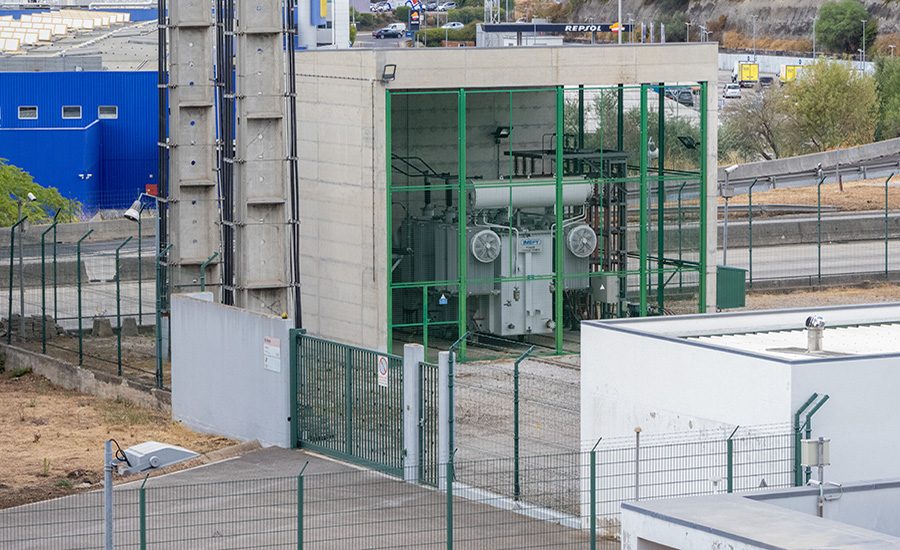

Earlier this month, Eire’s vitality regulator started implementing a conditional grid-connection framework for information facilities, reopening entry to energy after a years-long de facto moratorium and signaling a shift towards requiring new amenities to assist help the electrical energy system they depend on.
The transfer displays greater than a coverage adjustment in a single nation. For development companies energetic in information middle markets, it underscores a actuality already rising throughout the U.S.: entry to electrical energy is now not assumed. As an alternative, it’s more and more shaping whether or not tasks can advance, how they’re designed and when development can start.
Grid Entry Turns into the Gating Issue
Federal analysis helps clarify why regulators are tightening grid entry. A U.S. Division of Vitality evaluation ready by Lawrence Berkeley Nationwide Laboratory discovered that electrical energy demand from information facilities may almost triple by the tip of the last decade, pushed largely by cloud computing and synthetic intelligence workloads.
Congressional Analysis Service reporting has equally warned that giant, concentrated masses are arriving sooner than assumptions embedded in conventional grid planning.
Federal Vitality Regulatory Fee workers have echoed these considerations in latest reliability assessments, warning that speedy load development is colliding with slow-moving technology and transmission improvement and rising dangers throughout peak-demand intervals.
Interconnection-queue information tracked by Berkeley Lab present unprecedented backlogs throughout U.S. grid areas, with multiyear waits for research and upgrades turning into widespread.
For builders, the implication is direct: information middle tasks that after hinged totally on land availability and allowing are actually constrained by whether or not utilities can ship energy with out compromising system reliability.
U.S. Markets Are Already Imposing Situations
Whereas Eire’s transfer drew consideration due to its formal moratorium, comparable constraints are rising throughout U.S. markets via a variety of regulatory and utility mechanisms.
In Northern Virginia—the nation’s largest information middle hub—PJM Interconnection, the regional grid operator for a lot of the Mid-Atlantic and Midwest, forecasts demand development far exceeding historic norms.
Utility filings present that some proposed information middle campuses require new substations and main transmission upgrades earlier than development can start, successfully shifting energy infrastructure to the entrance of the undertaking schedule.
Texas is dealing with parallel pressures. ERCOT, the state’s unbiased grid operator, has reported a surge in large-load interconnection requests tied to information facilities and different energy-intensive amenities, prompting nearer scrutiny of how new demand impacts grid reliability. Midwestern areas are seeing comparable dynamics, with MISO, grid operator within the Midwest and South, documenting rising congestion and long-lead transmission wants as hyperscale amenities develop into states that after marketed plentiful, low-cost energy.
Throughout areas, utilities are now not treating grid connections as a formality. Approvals are more and more conditioned on infrastructure that have to be designed, financed and constructed.
Development Scope Expands Upstream
These situations translate instantly into an expanded development scope and a change in undertaking sequencing. Builders are more and more being requested to incorporate on-site technology, battery vitality storage methods and grid-interactive substations in early undertaking planning.
Analysis from the Nationwide Renewable Vitality Laboratory, administration renamed as Nationwide Laboratory of the Rockies, shows why regulators are leaning on behind-the-meter sources to stabilize methods strained by massive, rigid masses.
As ENR previously reported, information middle builders have already begun pairing new campuses with self-produced vitality, together with co-located technology and storage, to restrict internet grid demand and safe energy availability in constrained markets.
That method is turning into much less non-compulsory and extra structural as utilities tighten interconnection guidelines and require massive masses to deliver further infrastructure with them. One instance is Chevron’s plan to construct a dedicated power-generation facility in West Texas to help information middle demand, underscoring how builders are more and more securing grid entry by bringing on-site technology capability.
Environmental allowing and decarbonization necessities are additionally shaping regulatory responses. Federal and state insurance policies have made it harder so as to add conventional technology rapidly, whereas massive transmission tasks face prolonged environmental evaluations.
Consequently, regulators are extra inclined to approve tasks that restrict internet grid demand or incorporate versatile on-site energy methods, pushing further electrical and environmental scope into information middle development somewhat than relying solely on grid growth.
As energy infrastructure strikes from a late-stage utility interface to an early design driver, preconstruction timelines are stretching. Business analyses and utility filings point out that required grid upgrades and on-site energy methods can add tens of thousands and thousands of {dollars} to massive information middle tasks and lengthen preconstruction schedules by a yr or extra, relying on scope.
Contractors energetic in information middle markets say the shift is increasing early-stage scope, with energy infrastructure choices shaping website layouts and sequencing properly earlier than vertical development begins.
A Buildable Drawback, Not a Non permanent Pause
Assume tanks, together with the Middle for Strategic and Worldwide Research and the World Sources Institute, have framed grid congestion as an infrastructure funding problem somewhat than as a short-term coverage difficulty.
The latter says transmission growth,new technology and superior substations are extensively considered as essential, however their long lead times battle with the tempo of information middle improvement.
Ohio regulators accredited new AEP Ohio interconnection phrases for information facilities that embrace minimal billing and collateral provisions, whereas Virginia’s State Corporation Commission accredited a brand new large-user price class requiring sure massive prospects, together with information facilities, to pay minimal percentages of contracted demand to guard different ratepayers from infrastructure build-out prices.
This yr, West Virginia enacted laws creating “licensed microgrid districts” to pair information facilities with devoted technology whereas shielding different utility prospects from the price of supporting massive new masses.
Eire’s transfer makes express what U.S. utilities and their state handlers are signaling via interconnection guidelines and queue reforms: grid entry is now not unconditional, and enormous vitality customers are more and more being requested to assist construct the infrastructure they rely on.
For contractors, the lesson is obvious: energy availability has develop into as elementary to information middle supply as metal, concrete and fiber—and securing it more and more requires constructing way over a shell.
Trending Merchandise


CRAFTSMAN Pliers, 8 & 10″, 2Piece Groove Joint Set (CMHT82547)


TT TRSMIMA Safety Harness Fall Protection Upgrade 4 Quick Buckles Construction Full Body Harness 6 Adjustment D-ring


BIC Wite-Out Brand EZ Correct Correction Tape, 19.8 Feet, 4-Count Pack of White Correction Tape, Fast, Clean and Easy to Use Tear-Resistant Tape Office or School Supplies

![KwikSafety – Charlotte, NC – TSUNAMI KIT [Premium BRAIDED ROPE] Vertical Lifeline, 1-D Ring Safety Harness, Lightweight Tool Lanyard, Roof Anchor, 20L Dry Bag ANSI OSHA Fall Protection System / 50 FT.](https://m.media-amazon.com/images/I/51inmgg4jlL._SS300_.jpg)