.webp?t=1768840679)
Builders’ threat underwriting is not simply pricing publicity—it’s shaping how development initiatives are run, as insurers tighten phrases and push accountability for loss prevention deeper into the jobsite.
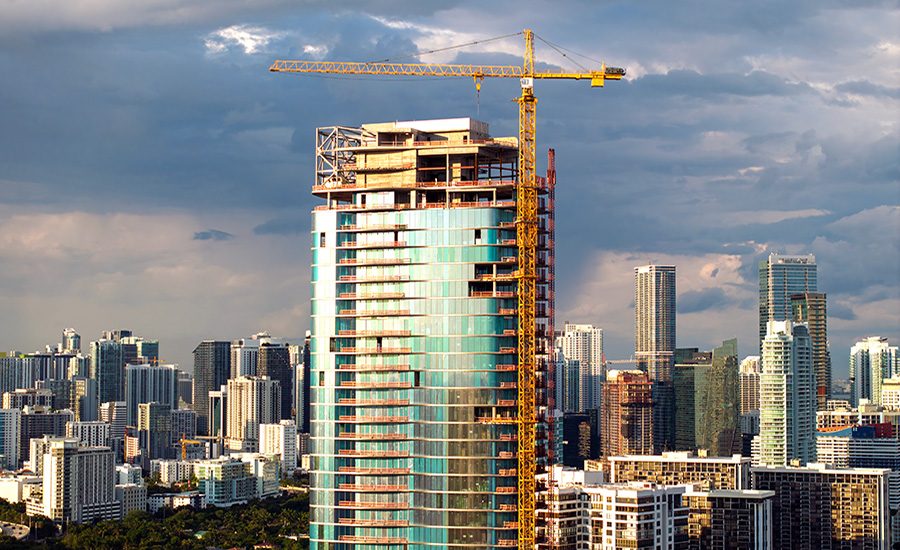
Greater deductibles and intensified scrutiny round weather- and water-related losses are pushing house owners and contractors to handle development threat earlier and extra intentionally, reshaping long-standing assumptions about what insurance coverage will take up and what the jobsite should forestall.
RELATED
The Overlooked Insurance Exclusion Lurking in Contractors’ Policies
Current market commentary from main brokers exhibits that whereas builders’ threat pricing has stabilized or softened in lower-risk segments, underwriters are more and more managing publicity by increased deductibles, tighter sublimits and nearer overview of challenge threat controls. This shift in underwriting observe is most pronounced on giant, advanced and catastrophe-exposed initiatives, the place insurers are asking house owners and contractors to display how key dangers like water injury and extreme climate are being mitigated on web site.
In observe, that shift typically exhibits up in how protection is structured quite than in its pricing. On giant vertical initiatives in hurricane- and flood-exposed markets, builders’ threat insurance policies are more and more written with increased water-damage deductibles and tighter sublimits for non-weather water losses, even when base premiums stay comparatively flat, in keeping with current development threat briefings from Marsh.
Underwriters are additionally asking for project-specific particulars—reminiscent of how momentary water programs are remoted, whether or not in a single day monitoring is in place and the way shortly shutoff protocols might be executed—earlier than binding protection, pushing insurance coverage issues into early development planning quite than treating them as an administrative step at monetary shut.
That stress isn’t uniform. In hurricane-exposed Gulf Coast markets like Florida, brokers say builders’ threat insurance policies are routinely written with named-storm deductibles that may run into the thousands and thousands of {dollars} on giant initiatives, alongside tighter sublimits for water injury and flood-related losses.
In contrast, many inside markets proceed to see comparatively decrease deductibles and fewer protection restrictions. Brokers notice that whereas coastal areas typically expertise these phrases first, related underwriting scrutiny is more and more being utilized to giant, high-value initiatives nationwide — no matter geography.
Insurers are additionally differentiating threat by challenge sort, in keeping with dealer surveys revealed by Willis Towers Watson. The London-based advisory firm experiences that project-specific builders’ threat insurance policies—generally used on giant towers, knowledge facilities and different high-value initiatives—face extra unstable phrases and pricing than grasp packages, with fee will increase of 5% to fifteen% for initiatives uncovered to natural-catastrophe threat.
That shift is exhibiting up not simply in premiums however in day-to-day development observe.
From Underwriting Strain to Jobsite Habits
Carlos Casal, government vp of development at Mast Capital, stated rising deductibles have modified how house owners consider threat on giant initiatives, notably in weather-exposed markets.
Mast Capital is a Miami-based actual property developer centered on high-rise residential and mixed-use initiatives in South Florida and different coastal markets, the place wind, water and schedule threat play an outsized position in development insurance coverage. The agency has developed and delivered a number of luxurious condominium towers and is advancing a number of large-scale initiatives in dense, weather-exposed city environments.
“In some unspecified time in the future, the deductible turns into giant sufficient that you simply’re successfully self-insuring the primary loss,” Casal stated. “When that occurs, stopping the loss issues greater than how good your declare restoration course of is.”
Casal stated insurers are more and more centered on water injury, web site situations, and schedule self-discipline—areas that have been traditionally handled as construction-management points quite than underwriting inputs.
“The dialog with insurers has shifted,” he stated. “They need to perceive what controls are literally in place on the jobsite, not simply what’s written within the coverage.”
Insurer commentary echoes that evaluation. Current development insurance coverage evaluation has recognized water injury and extreme convective storms as persistent loss drivers in builders’ threat, prompting higher scrutiny of water-damage mitigation plans and wider use of upper deductibles to share threat. Insurers have additionally pointed to a rising focus of worth on giant initiatives—reminiscent of knowledge facilities, hospitals and high-rise towers—the place losses can escalate shortly.
For house owners and contractors, that surroundings is accelerating a shift towards managing threat throughout development quite than counting on insurance coverage restoration after the actual fact.
One manifestation of that shift is the rising use of sensor-based monitoring and automatic controls to detect and reply to water leaks, curing anomalies and environmental situations earlier than they escalate.
Toronto-based Brickeye operates in that area, offering sensor-based monitoring and automatic shutoff programs designed to scale back jobsite threat. The corporate says its programs are more and more being mentioned throughout builders’ threat underwriting, as insurers ask house owners and contractors to doc how water and environmental dangers are being actively monitored throughout development.
Brickeye raised $10 million in a Sequence B funding spherical in January, reflecting rising investor curiosity in applied sciences geared toward lowering publicity throughout development as insurers tighten builders’ threat phrases.
“What we’re seeing is that insurers are not glad with normal statements about threat administration,” stated Tim Angus, Brickeye’s co-founder and CEO. “They need to perceive what controls are literally in place on the jobsite and the way losses are being prevented in actual time.”
For some contractors, insurance coverage economics—not know-how enthusiasm—have been the catalyst.
RELATED
Viewpoint | Building Sensors Make Financial Sense in Construction Insurance
Blaik Ross, government vp at Beauchamp Development, stated his agency initially adopted monitoring instruments to scale back water losses and downtime, however later took an fairness stake in Brickeye after seeing how documented threat controls affected underwriting discussions.
Beauchamp is a normal contractor working all through South Florida’s East Coast, with a portfolio spanning high-rise residential, industrial and complicated coastal initiatives—putting it squarely in markets the place water injury and weather-related losses have grow to be more and more consequential. The agency’s work has positioned it immediately within the path of rising builders’ threat deductibles and extra stringent underwriting opinions.
“Water losses was handled as a price of doing enterprise,” Ross stated. “However when deductibles climb into six figures, that mindset stops working.”
Ross famous that insurers are more and more asking how dangers are being managed in actual time, not simply how they are going to be reported after a loss.
“With the ability to present what controls are in place—and once they’re lively—adjustments the dialog,” he stated. “It’s not theoretical.”
Casal stated Mast Capital has deployed monitoring and risk-mitigation instruments throughout a number of high-rise initiatives, not as a know-how experiment however as a response to insurance coverage market realities.
“This isn’t about devices,” Casal stated. “It’s about self-discipline. The insurance coverage market is forcing higher conduct, and house owners are pushing that self-discipline down by the challenge group.”
For house owners and contractors navigating increased deductibles and narrower margins for error, that shift is already underway.
“Managing threat used to begin with the declare,” Casal stated. “Now it begins with how the challenge is definitely run.”
Trending Merchandise


CRAFTSMAN Pliers, 8 & 10″, 2Piece Groove Joint Set (CMHT82547)


TT TRSMIMA Safety Harness Fall Protection Upgrade 4 Quick Buckles Construction Full Body Harness 6 Adjustment D-ring


BIC Wite-Out Brand EZ Correct Correction Tape, 19.8 Feet, 4-Count Pack of White Correction Tape, Fast, Clean and Easy to Use Tear-Resistant Tape Office or School Supplies

![KwikSafety – Charlotte, NC – TSUNAMI KIT [Premium BRAIDED ROPE] Vertical Lifeline, 1-D Ring Safety Harness, Lightweight Tool Lanyard, Roof Anchor, 20L Dry Bag ANSI OSHA Fall Protection System / 50 FT.](https://m.media-amazon.com/images/I/51inmgg4jlL._SS300_.jpg)