New and present buildings receiving funds from the U.S. Division of Vitality gained’t have to satisfy accessibility necessities starting Sept. 12 in a fast-tracked rule rescission that has alarmed disability-rights advocates.
The company on May 16 used what’s often known as a direct remaining rule to announce it’s rescinding a rule that’s been on the books for the reason that Seventies requiring any constructing receiving federal funds, whether or not for brand new development or present process renovation, to be made accessible.
DOE stated the Part 504 rule, which was written by the then-Division of Well being, Training and Welfare and included by Congress into the Rehabilitation Act of 1973, is pointless due to different federal necessities, so it’s fast-tracking the rule rescission.
“Given the final prohibition on discriminatory actions and associated penalties … DOE finds these extra provisions pointless and unduly burdensome,” the company stated within the preamble to the rule rescission. “It’s DOE’s coverage to present personal entities flexibility to adjust to the legislation within the method they deem best. One-size-fits-all guidelines are hardly ever the most suitable choice. Accordingly, DOE finds good purpose to get rid of this regulatory provision.”
The company supposed to make the rescission efficient July 15 however pushed the date again to Sept. 12 after it obtained more than 20,000 comments, a big variety of which had been protesting the motion.
Coverage pushback
Incapacity-rights advocates say the company is misusing the fast-track course of. Direct remaining guidelines are supposed for uncontroversial regulatory actions, like altering the title of a program, they are saying, not for rescinding a rule that’s required beneath federal statute, as this one is.
“The Division of Vitality’s choice … is a direct assault on incapacity rights and a part of a broader sample of civil rights rollbacks aligned with Trump-era insurance policies,” Robyn Powell, an assistant professor at Stetson College Faculty of Legislation, told Mother Jones.
“I’ve by no means seen [the process] earlier than in my profession, and most of my colleagues report the identical,” Claudia Heart, authorized director on the Incapacity Rights Training & Protection Fund, said in a Disability Scoop report.
DREDF requested its supporters to ship a letter to DOE protesting the rescission, saying the company motion goes towards Congress and the courts.
“Congress handed the Rehabilitation Act,” the suggested letter says. “Congress stated it agreed with the 504 guidelines. Congress added the 504 guidelines to the Rehabilitation Act. The Supreme Courtroom has regarded on the guidelines and stated they belong within the Rehabilitation Act. U.S. courts have spent years ensuring individuals observe the principles.”
Advocates say they’re involved different fast-tracked rescissions are to return.
“This motion might be a ‘trial balloon’ for different businesses,” Heart stated. “There are greater than 80 units of Part 504 laws throughout the federal authorities. This might be the primary of many.”
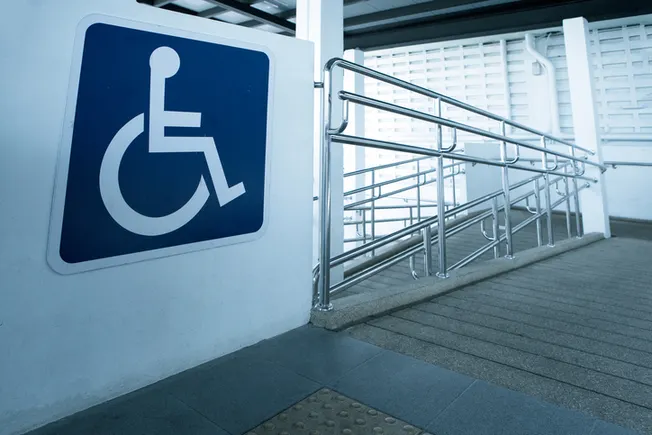
Ought to the rescission take impact as deliberate, corporations and different organizations that acquire DOE grants to make their buildings extra environment friendly or for different functions gained’t must take steps to make the buildings accessible in the event that they’re not accessible already. Accessibility options can embody ramps, extensive doorways and railings.
The Part 504 rule provides constructing operators flexibility in how they meet the accessibility necessities, that are based mostly on the Uniform Federal Accessibility Standards, created in 1984. For instance, there’s no expectation for a constructing operator to make a structural change to a load-bearing wall so as to add an accessible characteristic. However cheap adjustments that may be made needs to be made “to the utmost extent possible,” the rule says.
Even with the rule rescinded, constructing operators that skip accessibility modifications nonetheless face legal responsibility threat beneath different legal guidelines, a incapacity lawyer says.
They “would nonetheless be open to legal responsibility beneath basic non-discrimination necessities,” Amy Robertson, a civil rights lawyer, stated within the Incapacity Scoop report.
Trending Merchandise


CRAFTSMAN Pliers, 8 & 10″, 2Piece Groove Joint Set (CMHT82547)


TT TRSMIMA Safety Harness Fall Protection Upgrade 4 Quick Buckles Construction Full Body Harness 6 Adjustment D-ring


BIC Wite-Out Brand EZ Correct Correction Tape, 19.8 Feet, 4-Count Pack of White Correction Tape, Fast, Clean and Easy to Use Tear-Resistant Tape Office or School Supplies

![KwikSafety – Charlotte, NC – TSUNAMI KIT [Premium BRAIDED ROPE] Vertical Lifeline, 1-D Ring Safety Harness, Lightweight Tool Lanyard, Roof Anchor, 20L Dry Bag ANSI OSHA Fall Protection System / 50 FT.](https://m.media-amazon.com/images/I/51inmgg4jlL._SS300_.jpg)