
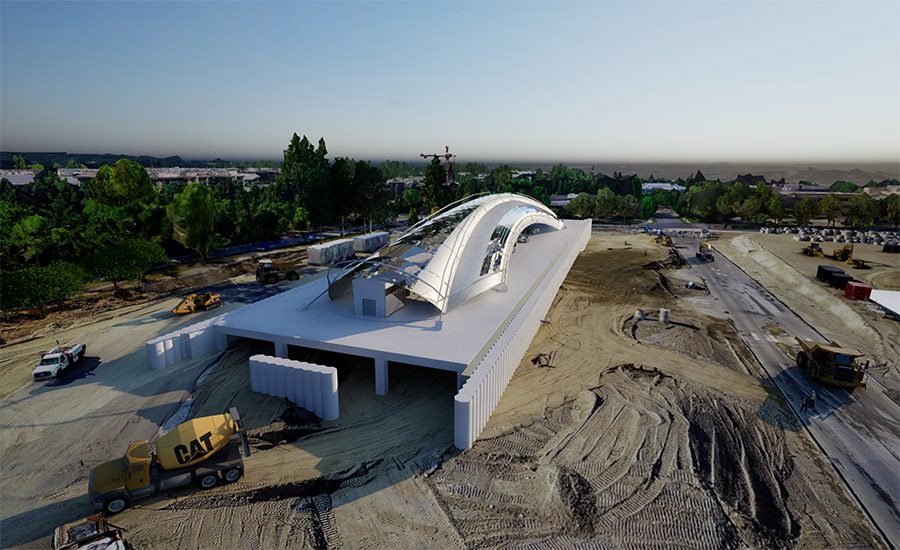

The structure, engineering, and building (AEC) sector has all the time trusted visualization know-how. From hand-drawn sketches to blueprints, to CAD fashions and photorealistic renderings, every technology of instruments has aspired to make complicated initiatives extra comprehensible. Nevertheless, as infrastructure initiatives proceed to develop in scale and complexity, conventional visualization strategies are displaying their limits.
Static renderings and pre-produced flythroughs can solely go thus far in capturing the size and nuance of billion-dollar transportation packages or main city redevelopment initiatives. They will also be expensive, time-intensive, and sometimes out of date the second designs evolve. Most significantly, they fail to supply the type of readability and interactivity that fashionable stakeholders (homeowners, regulators, and the general public) demand.
In step with the previous evolution of undertaking visualization know-how, a brand new period is rising as real-time, accessible, high-fidelity, and impactful. Fueled by advances in gaming know-how and open knowledge requirements, real-time superior visualization is altering how initiatives are communicated, understood, and delivered. But, one of many largest challenges stays: bridging the abilities hole that has traditionally made high-quality visualization the area of specialists.
The evolution of visualization in AEC
AEC visualization has advanced in waves. First got here 2D drawings and schematics—important, however arduous for non-technical stakeholders to interpret. Subsequent got here 3D CAD fashions and photorealistic renderings, which took the subsequent step in bringing initiatives to life, however required appreciable money and time to provide.
By the early 2000s, animations and video flythroughs had grow to be a staple for main initiatives. They supplied an improved sense of scale and context, however they had been nonetheless static in nature, displaying solely what designers had chosen to disclose. They may additionally carry a steep price ticket: producing a high-quality video might take weeks of effort from extremely expert visualization groups or distributors.
In the present day, the trade stands at one other visualization inflection level. With the rise of real-time online game rendering engines and requirements, equivalent to Open Geospatial Consortium (OGC) 3D Tiles, infrastructure fashions can now be rendered interactively, on-the-fly, and with photorealistic high quality and the power so as to add extra context to the image within the type of geospatial knowledge, 3D objects, and 4D timelines. These improvements signify greater than a technical improve; it’s a basic shift in how infrastructure initiatives and designs could be communicated and skilled.
The facility of context: geospatial, 3D, and 4D in visualization
Visualization in AEC has moved far past static photographs and offline fashions. In the present day, superior visualization combines real-time interactivity, geospatial context, clever 3D objects, and 4D timelines to ship a extra complete and compelling imaginative and prescient of a undertaking.
By incorporating geospatial context, groups can place designs inside their precise bodily location, displaying roads, terrain, and surrounding infrastructure so decision-makers immediately see how a undertaking matches into the true world. Including 3D objects—equivalent to folks, autos, and vegetation—offers depth, scale, and element, permitting stakeholders to discover belongings as they may really exist, somewhat than as summary types. With the addition of 4D timelines, visualization evolves into one thing much more highly effective: a residing narrative that illustrates how a undertaking will unfold over months or years.
This layering of dimensions transforms visualization from a “fairly image” right into a sensible decision-making software. Engineers can anticipate challenges earlier, planners can optimize sequencing and phasing, and communities can higher perceive each speedy impacts and long-term advantages.
Equally vital is real-time interactivity. As an alternative of ready for specialists to generate static renderings, groups can modify supplies, lighting, or phasing on the fly. Stakeholders can ask “what if” questions and see speedy solutions, remodeling visualization into an energetic a part of the decision-making course of somewhat than a passive deliverable.
Collectively, these capabilities signify a basic shift: from visualization as a presentation software to visualization as an engagement platform. They create shared understanding, speed up consensus, and make even probably the most complicated infrastructure initiatives simpler to speak. For stakeholders, this strategy makes conversations much less summary and extra tangible. For undertaking groups, it accelerates alignment, reduces misunderstandings, and helps extra assured, knowledgeable choices at each stage of supply.
Democratizing visualization
Whereas the know-how required for superior visualization shouldn’t be fully new, cumbersome instruments and workflows, in addition to the necessity for skilled specialists, have slowed its adoption. Optimizing giant design recordsdata for real-time rendering, integrating them into gaming engines, and constructing interactive experiences are duties most engineers and undertaking managers are usually not skilled to do.
The following nice leap for the AEC sector shouldn’t be merely about higher visualization know-how; it’s about making the know-how usable by non-specialists. The aim is to democratize visualization, making it as simple for a undertaking supervisor to create an immersive undertaking presentation as it’s to place collectively a slide deck.
This democratization development is already seen throughout the trade:
- Design democratization by means of BIM and digital twins.
- Knowledge democratization by means of cloud-based collaboration.
- Now, visualization democratization ensures that each crew member, no matter technical background, can inform the undertaking’s story visually.
The advantages are profound:
- Quicker communication: Shows could be created in hours, not weeks.
- Value effectivity: Reduces the necessity for specialised outsourcing.
- Improved engagement: Non-technical stakeholders can perceive complicated initiatives intuitively.
- Fairness: Everybody on the undertaking crew features the power to speak with visuals, not only a choose few.
The highway forward
The AEC sector is coming into a brand new period of undertaking communication. Actual-time, interactive experiences that may be produced by any member of the undertaking crew are changing static visualizations and expensive, preset flythroughs.
On this new paradigm:
- Stakeholders count on interactivity. Static photographs is not going to be sufficient to win approval or construct belief.
- Visualizations grow to be routine. Each undertaking, not simply flagship packages, will leverage real-time visualization.
- Abilities are usually not a barrier. Instruments will proceed to evolve in order that anybody on the undertaking crew can create impactful shows.
This isn’t only a matter of effectivity; it’s about competitiveness. Companies that embrace real-time, accessible visualization will safe approvals quicker, construct stronger consumer relationships, and have interaction communities extra successfully. Those that don’t threat being left behind.
Conclusion: A brand new visible language for infrastructure
The way forward for undertaking visualization is now not about static renderings or remoted fashions—it’s about superior, contextual, and interactive experiences. By combining geospatial consciousness, clever 3D objects, 4D timelines, and real-time interactivity, undertaking groups can transfer past aesthetics to ship visualizations that drive actual understanding and alignment.
For stakeholders, this implies clearer communication and extra confidence in choices. For undertaking groups, it means fewer delays, earlier difficulty detection, and stronger engagement at each stage of supply. And for the AEC sector, it marks a turning level: visualization is now not a supporting position—it has grow to be a core enabler of smarter, quicker, and extra sustainable undertaking outcomes.
The initiatives that succeed on this new period would be the ones that don’t simply present their designs, however carry them to life—in context, in time, and in ways in which everybody can perceive.
Uncover the subsequent period of visualization with Bentley’s iTwin Interact
The way forward for superior visualization is arriving quickly. iTwin Interact, Bentley’s new visualization utility, will make it simpler than ever to carry infrastructure initiatives to life with geospatial context, clever 3D fashions, 4D timelines, and real-time interactivity. Go to our campaign page to study extra, keep knowledgeable concerning the upcoming launch, and be the primary to expertise how iTwin Interact can remodel the best way you talk your initiatives.
By Mike Williams, senior product advertising supervisor, Bentley
Trending Merchandise


CRAFTSMAN Pliers, 8 & 10″, 2Piece Groove Joint Set (CMHT82547)


TT TRSMIMA Safety Harness Fall Protection Upgrade 4 Quick Buckles Construction Full Body Harness 6 Adjustment D-ring


BIC Wite-Out Brand EZ Correct Correction Tape, 19.8 Feet, 4-Count Pack of White Correction Tape, Fast, Clean and Easy to Use Tear-Resistant Tape Office or School Supplies

![KwikSafety – Charlotte, NC – TSUNAMI KIT [Premium BRAIDED ROPE] Vertical Lifeline, 1-D Ring Safety Harness, Lightweight Tool Lanyard, Roof Anchor, 20L Dry Bag ANSI OSHA Fall Protection System / 50 FT.](https://m.media-amazon.com/images/I/51inmgg4jlL._SS300_.jpg)